Godzilla Minus One (2023): A Postwar Kaiju Drama
A spoiler-light look at Godzilla Minus One (2023), the postwar kaiju drama, covering its premise, tone and whether it is worth starting.
November 12, 2026
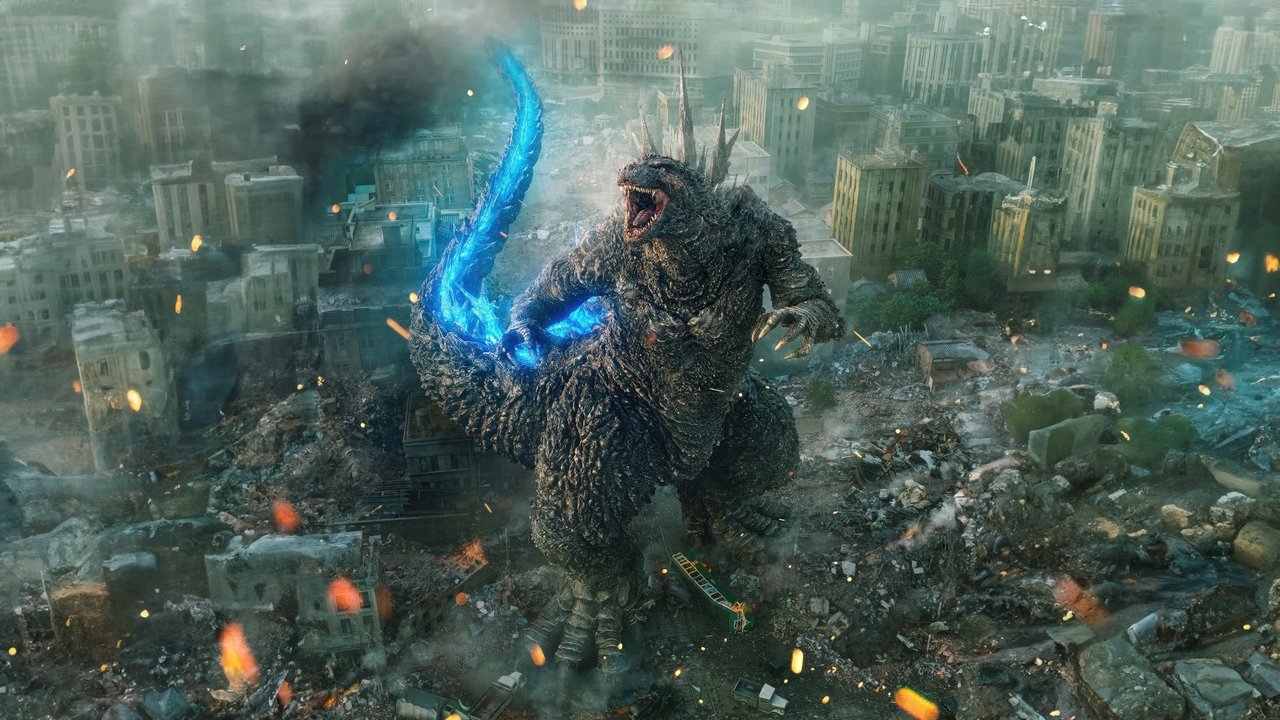
A Spoiler-Free First Look
Takashi Yamazaki's 2023 entry into the long-running kaiju franchise arrived with a surprising amount of noise for a subtitled monster movie, and curiosity has only grown since. If you have been holding off, this is a gentle, spoiler-light walkthrough of what the film actually offers before you press play. The short version: it is a period piece, it is a drama with a creature in it, and it treats its audience like adults.
The Premise
The story drops us into Japan in the immediate aftermath of the Second World War. Cities are already rubble, families are grieving, and the country is rebuilding from nothing. Into that fragile moment comes something enormous and radioactive, and there is no army left to stop it. That is the premise in a nutshell, and it is worth noting up front that the film's early minutes are not about the monster at all. They are about a young pilot named Koichi, a man carrying shame and survivor's guilt, and the makeshift household he falls into. The creature arrives as an intrusion on human grief rather than the reverse, and that inversion is the whole engine of the movie.
Part of what makes Godzilla Minus One first look so compelling is how deliberately the filmmakers withhold the reveal. You get glimpses, aftermaths, and pressure waves before you get a clean view of the beast, and the buildup pays off. The atomic test backdrop and the radioactivity that shadows the creature are woven into the setting rather than tacked on, so the monster feels like a consequence of history instead of a random visitor.
Tone, Style and Pace
The tone is somber and grounded, closer to a war drama than to a summer spectacle. Director Takashi Yamazaki keeps the camera at human height and lets silence do a lot of work. When the destruction arrives, it is genuinely upsetting rather than fun, and the film is careful to show who is on the street when buildings fall. If you are wondering is Godzilla Minus One scary, the answer is yes, but not in a jump-scare way. It is scary the way a tsunami documentary is scary: overwhelming, loud, and indifferent to the people below.
Pace-wise the film is patient. It spends a long first act on character and domestic life before the creature becomes the center of the movie, and the two halves are stitched together through Koichi's arc. If you are here for wall-to-wall monster footage, know that the action is spaced out, though the set pieces themselves are enormous and beautifully staged. Fans of practical-feeling naval combat and storm-tossed ocean chases will find plenty to chew on.
The performances are uniformly strong, with Ryunosuke Kamiki carrying the emotional weight and Minami Hamabe grounding the household side of the story. The children and neighbors round out a small ensemble that feels lived-in, which matters because the film asks you to care about them before it asks you to fear for them. If you want a comparison point, the somber, human-scale dread of Underwater lands in a similar register, though the two films approach their monsters very differently.
Should You Start It?
Yes, with a caveat. This is a great choice if you want a monster movie that respects your intelligence and your time, delivers its emotional beats without cynicism, and ends on a note that feels earned. It is a worse choice if you want a light, quippy creature feature to half-watch on a second screen. The film asks for attention, and it rewards it.
Parents, meanwhile, will want the short version in advance. There is sustained peril, on-screen deaths, a child in danger, and several sequences of mass destruction that play as genuinely frightening. Older teens can handle it; younger children should probably sit this one out. If you are checking a Godzilla Minus One parents guide, the honest summary is intense disaster imagery plus heavy wartime themes, and the violence is more about scale and implication than gore. That said, the film also asks for a moment or two of patience with its quieter stretches, so if you have already been put off by the pacing in older installments, a comparison to Godzilla 2000: Millennium is useful: the newer film trades camp for restraint, and not every viewer will prefer that trade.
On the rating question, this entry carries the Godzilla Minus One PG-13 label in the US, which fits: it is intense but not graphic, and the horror is atmospheric rather than explicit.
The Bottom Line on Godzilla Minus One
This is the rare reboot that justifies its own existence. It takes a franchise that has been remade, remixed, and relaunched for seven decades and finds a genuinely new angle by treating the creature as a symptom of national trauma rather than the cause. The effects are excellent, the performances are moving, and the film's emotional core holds together even when the spectacle takes over. It is not the breeziest watch on the service, and it does not pretend to be. What it offers is a serious, well-crafted story about ordinary people choosing to fight back when no one is coming to save them.
Godzilla Minus One Need to Know
- Director: Takashi Yamazaki
- Cast: Ryunosuke Kamiki, Minami Hamabe, Yuki Yamada, Munetaka Aoki, Hidetaka Yoshioka, Sakura Ando, Kuranosuke Sasaki, Sae Nagatani
- Genres: Science Fiction, Horror, Action
- Runtime: 125 minutes
- Rating: 7.619/10 from roughly 3,641 votes
- Tagline: 戦後、日本。無(ゼロ)から負(マイナス)へ。
If you enjoy the human-scale horror here, the grim, survival-focused energy of Attack on Titan makes a natural next stop. And yes, there is a post-credits tag, so stay put once the credits roll.